System
The Data-Ecosystem:
Infrastructure coordinated across compute, energy, and heat.
The DataEcosystem connects compute, energy, cooling, and heat recovery into one coordinated infrastructure layer, designed for AI and high-density computing.
One coordinated infrastructure layer.
Compute, energy, cooling, and heat recovery operating within one interconnected regional system.
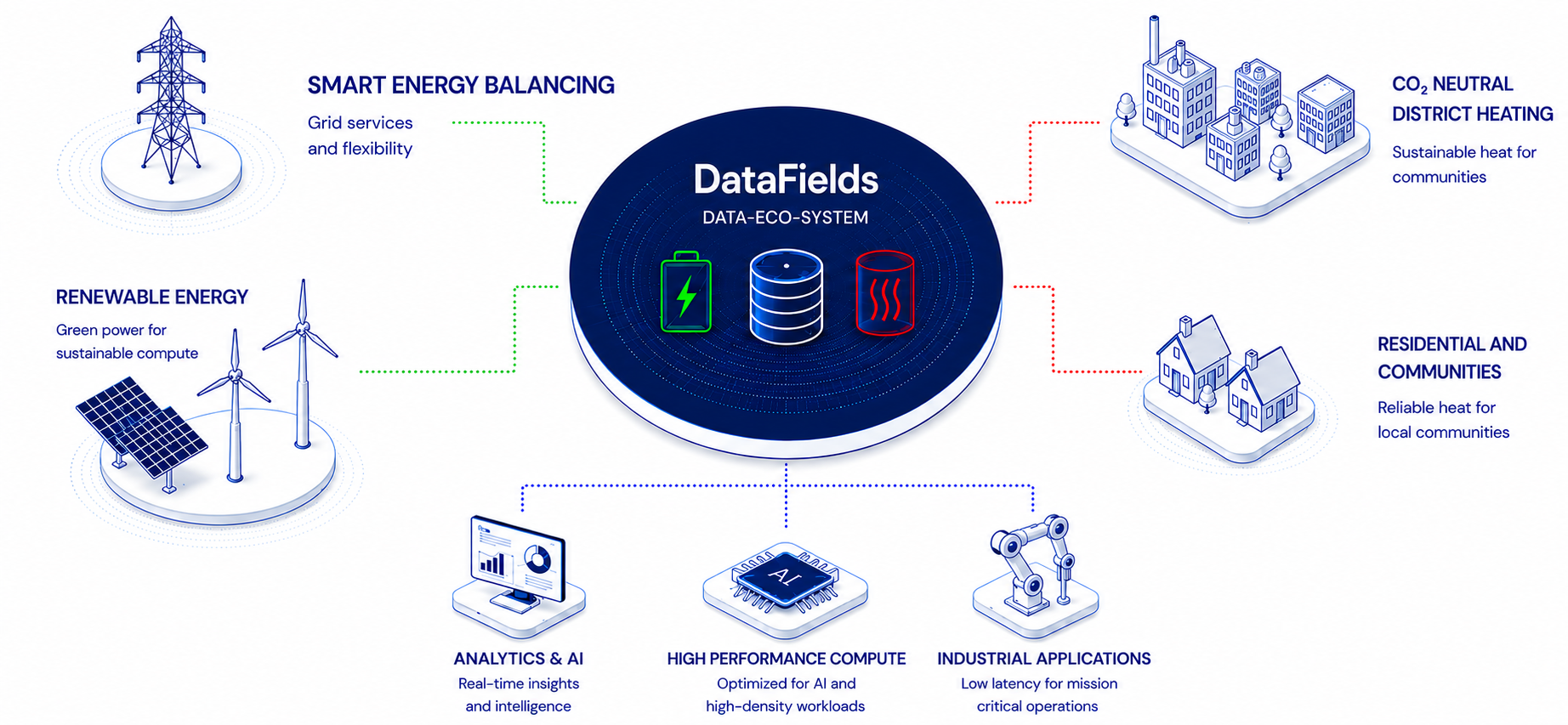
Compute
AI and high-density workloads >100kW per rack
Energy
Regional renewable energy integration, storage and smart energy balancing
Cooling
Modern liquid-cooled infrastructure environments
Heat recovery
High temperature (>60°C) heat reuse for district heating networks or local systems
Distributed edge infrastructure
Built around regional infrastructure nodes.
Capacity expands through modular edge deployments rather than centralized hyperscale concentration – closer to where compute is needed, harder to disrupt at scale through geographic redundancy.
Resilient by Design
Distribution removes single points of failure. Behind-the-meter operation supports long-term grid-independent operation per site, where required. Dual-use capabilities possible.
Measurable infrastructure performance
Efficiency designed into the system.
Estimated infrastructure efficiency target.
Recovered high-temperature thermal output.
Improved water usage effectiveness.
Supports verifiable ESG reporting and EU compliance frameworks.
Designed for tomorrows tech
Infrastructure designed for next-generation workloads.
Modular, liquid-cooled environments for AI
and compute-intensive workloads.
AI & high-density workloads
Optimized for next-generation compute demand. Liquid-cooled infrastructure designed for rack densities exceeding 100 kW.
Low-latency edge compute
Compute deployed closer to industrial and regional demand via Custom Edge Solutions.
Future-ready architecture
Prepared for evolving compute architectures and future infrastructure requirements. Continuous technology & service adaptation to market needs.

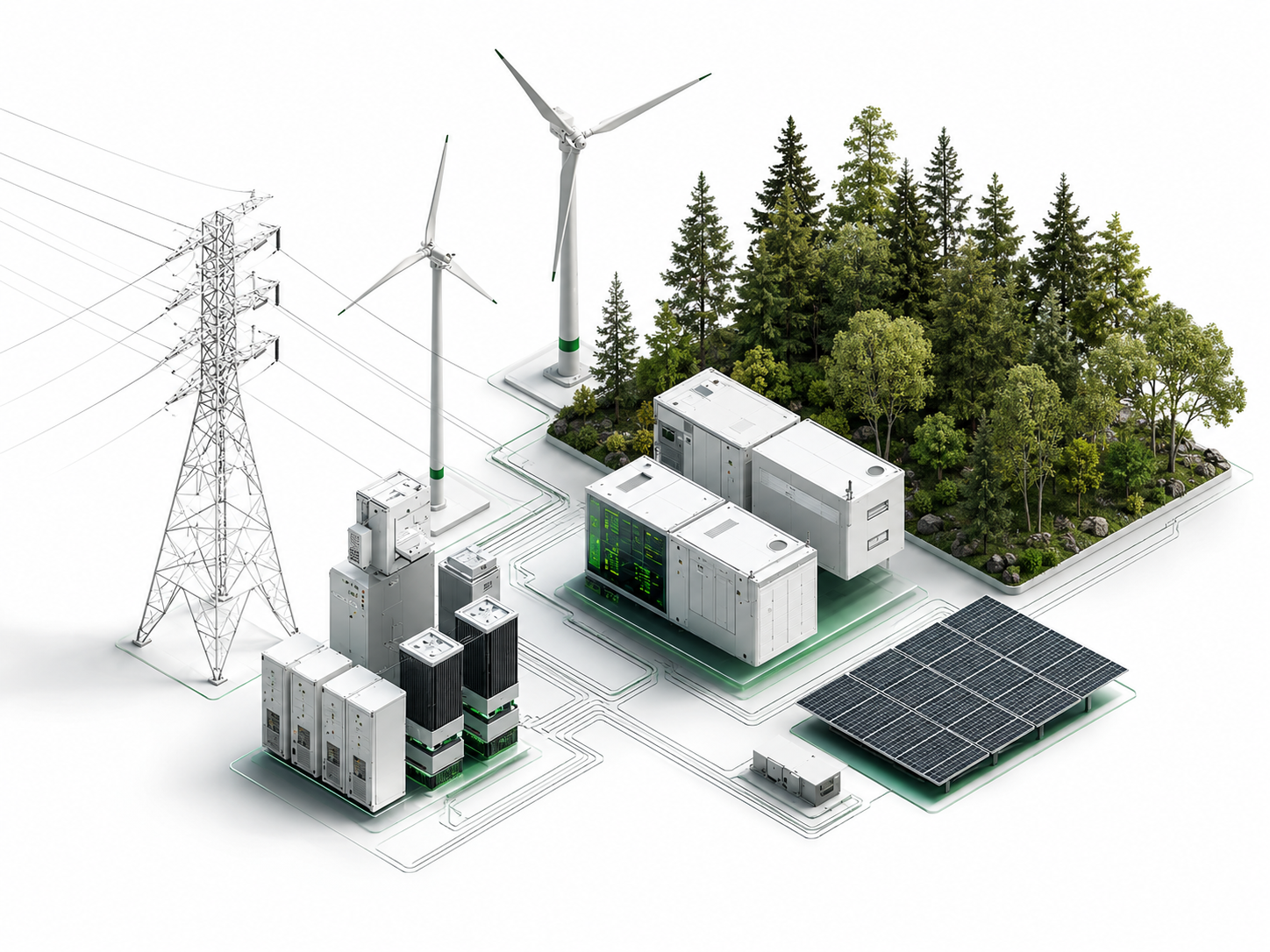
Grid-native energy integration
Compute coordinated with local energy systems.
Energy-aware infrastructure connects renewable generation, storage, and regional grid environments.
Renewable integration
Integrated battery storage absorbs volatile generation from PV and wind, making renewable energy a reliable compute power source.
Grid stabilization & optimization
The same battery system enables peak shaving, load shifting, and dynamic grid adaptation – reducing energy costs and grid stress. Flexible DataCenter workloads will be scheduled acording to grid-status.
Behind-the-meter resilience
On-site battery storage replaces traditional diesel backup generators, enabling grid-independent operation without fossil fuel dependency. Supports dual-use configurations for long-term off-grid or hybrid operation where required.
Circular energy systems
Heat becomes infrastructure value.
Thermal energy from compute is recovered and reused in local heating systems and industrial environments.
Data-heat coupling
Recovered server heat reused within local systems. Up to 80% high-temperature heat reuse potential.
High-temperature heat recovery
With output temperatures exceeding 60 °C, the system is suitable for district heating applications (~110 °C) while maintaining a favorable COP.
Green heat generation
Renewable-powered compute creates renewable, carbon-neutral heat output.

SOVEREIGN INFRASTRUCTURE
Sovereignty built into the infrastructure layer.
Operated within European legal frameworks and built on open hardware standards – designed for jurisdictional independence and long-term operational control.
EU ownership & operation
Owned and operated by a German entity under German law. EU supply chains & procurement.
German Data Protection
Our sites are located in Germany and are subject to DSGVO. Your workloads never leave the country, by design and by contract.
No CLOUD Act exposure
Beyond the reach of US extraterritorial access laws and comparable foreign jurisdictions.
Open infrastructure approach
Committed to interoperable systems and open standards – reducing proprietary lock-in at the hardware layer.